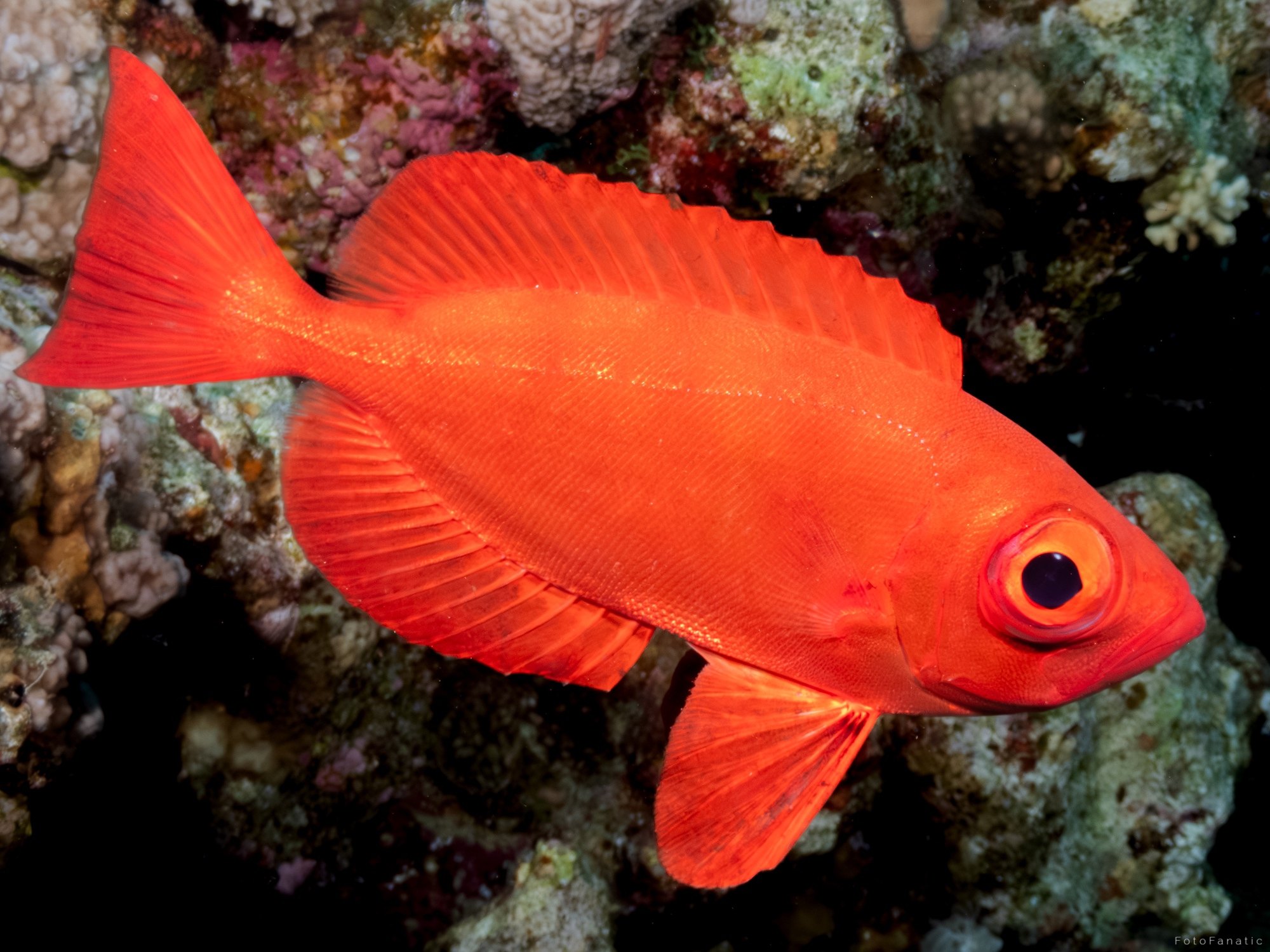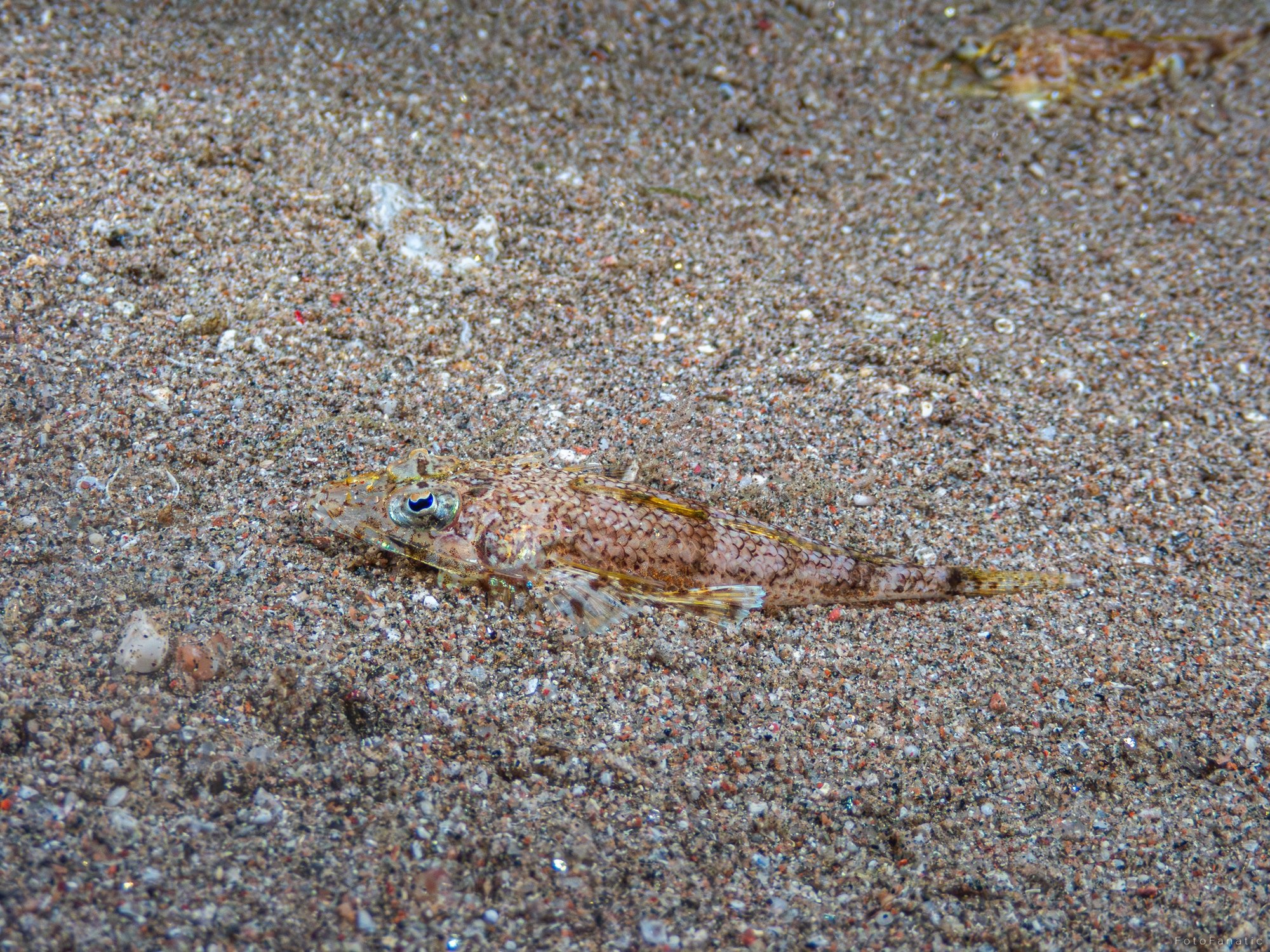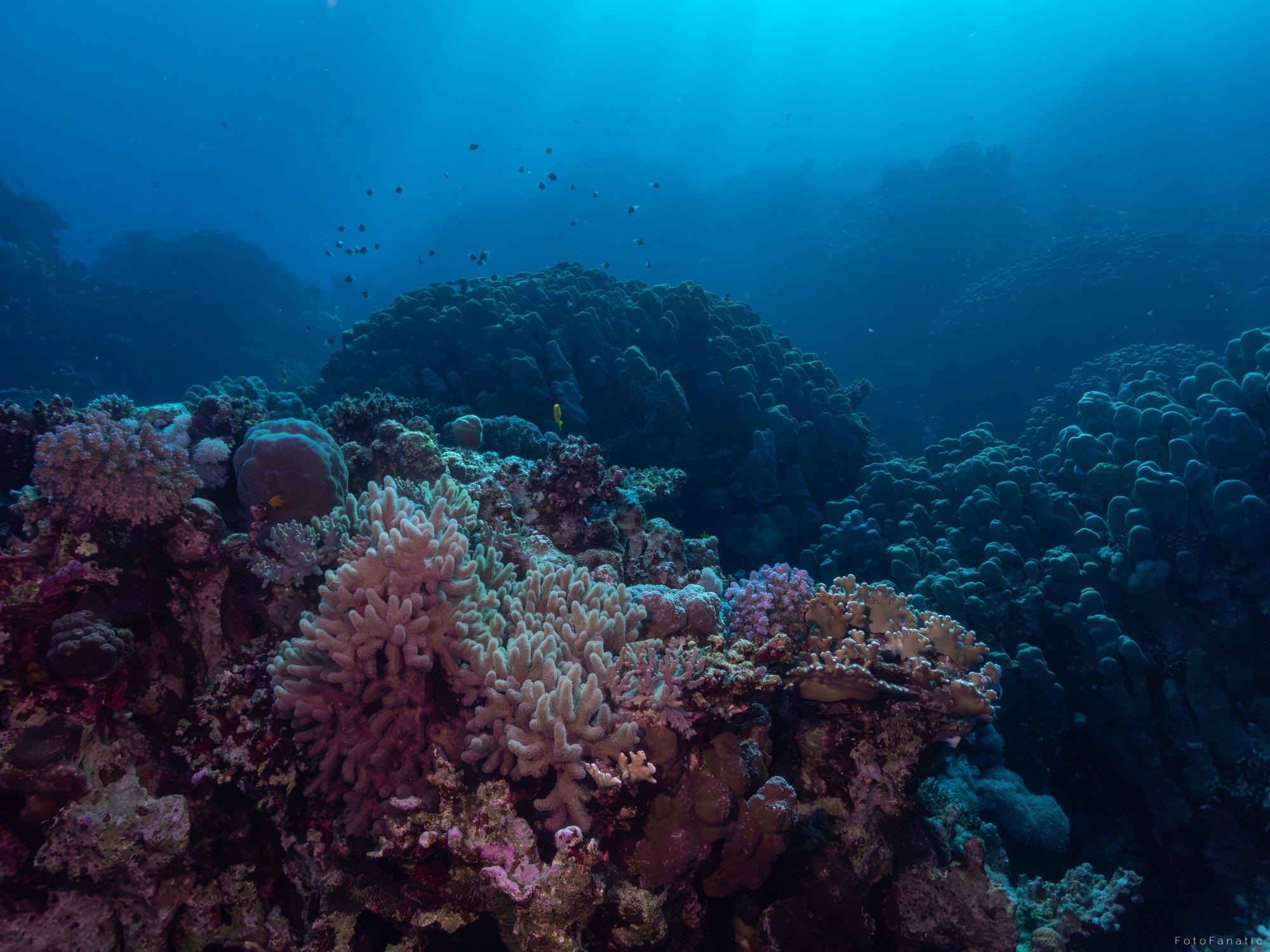
Dahab lies along the Gulf of Aqaba, where the Red Sea feels very different from the postcard image of shallow, gently sloping reefs. Here, the coastline borders a tectonic rift. The seabed doesn't gradually taper into the distance. It drops. The reef ends abruptly and the blue takes over. You are not swimming toward an underwater horizon. You are suspended above depth.
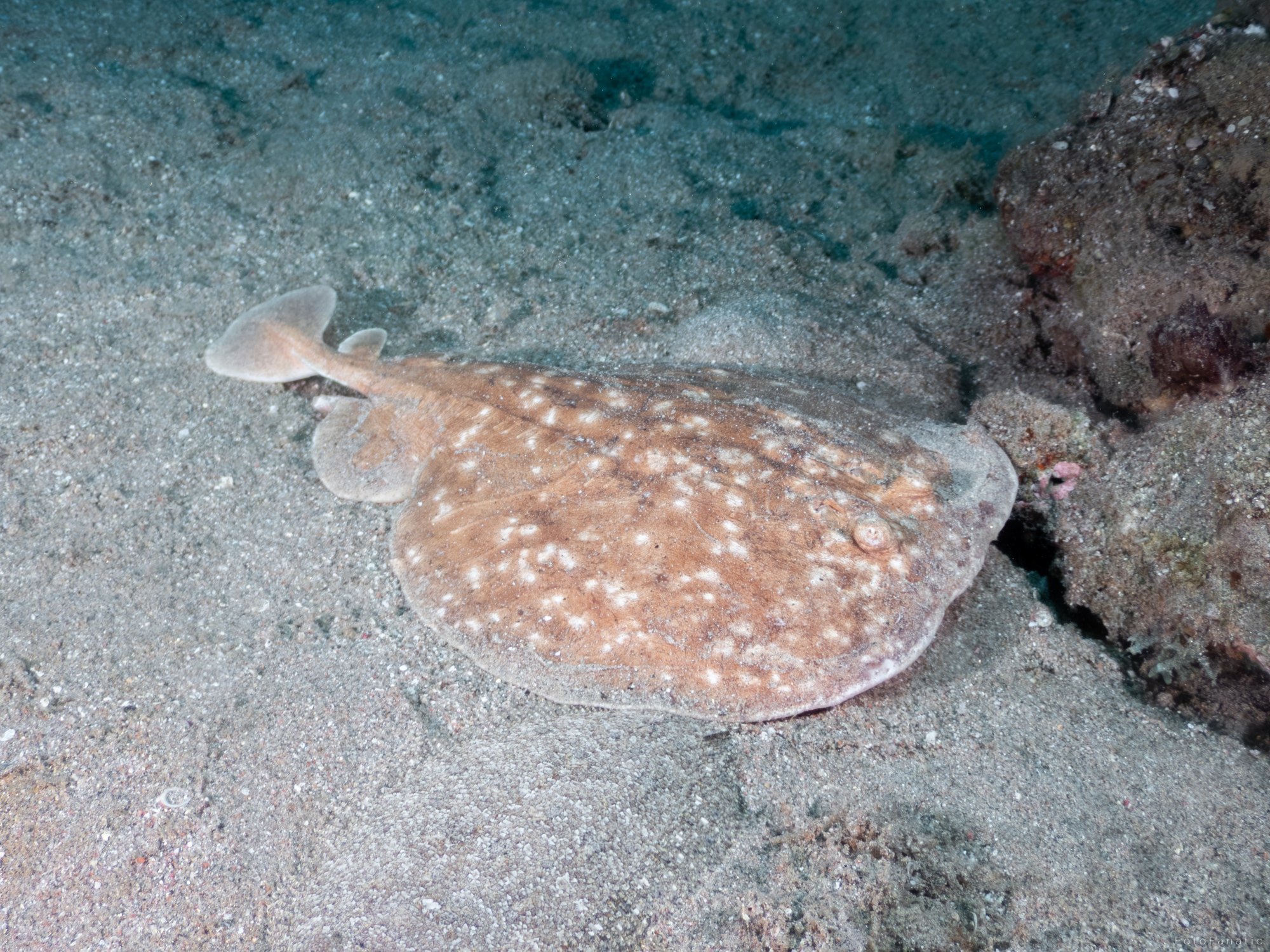
Lagona Divers was our base for the week, with Golden Blocks as our house reef. A straightforward shore entry, but far from a simple dive. The first descent was about recalibrating: finding neutral buoyancy in a 3mm suit, testing how much lead I needed because the Red Sea is saltier, and of course testing the camera. After a nice, relaxed dive where we also found an electric ray, everything was set for a great week of diving.
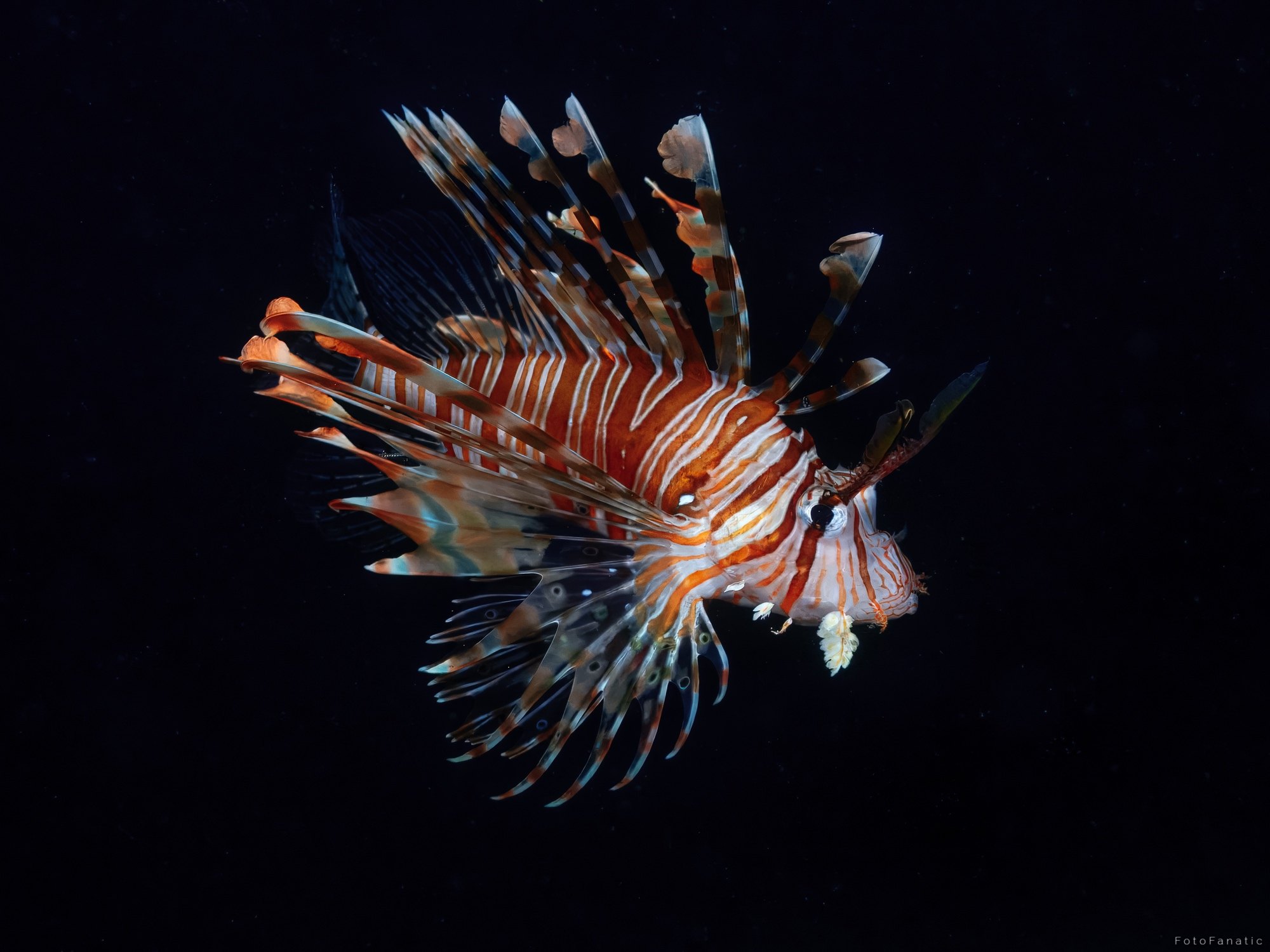
Golden Blocks also became the setting for my 300th dive — a night dive, and my first in tropical water, shared with Jolanda, my buddy throughout the week. On a second night dive, a large lionfish began shadowing my light, clearly using it to hunt, materializing directly in front of me from the dark more than once. Not threatening, just unapologetically present.
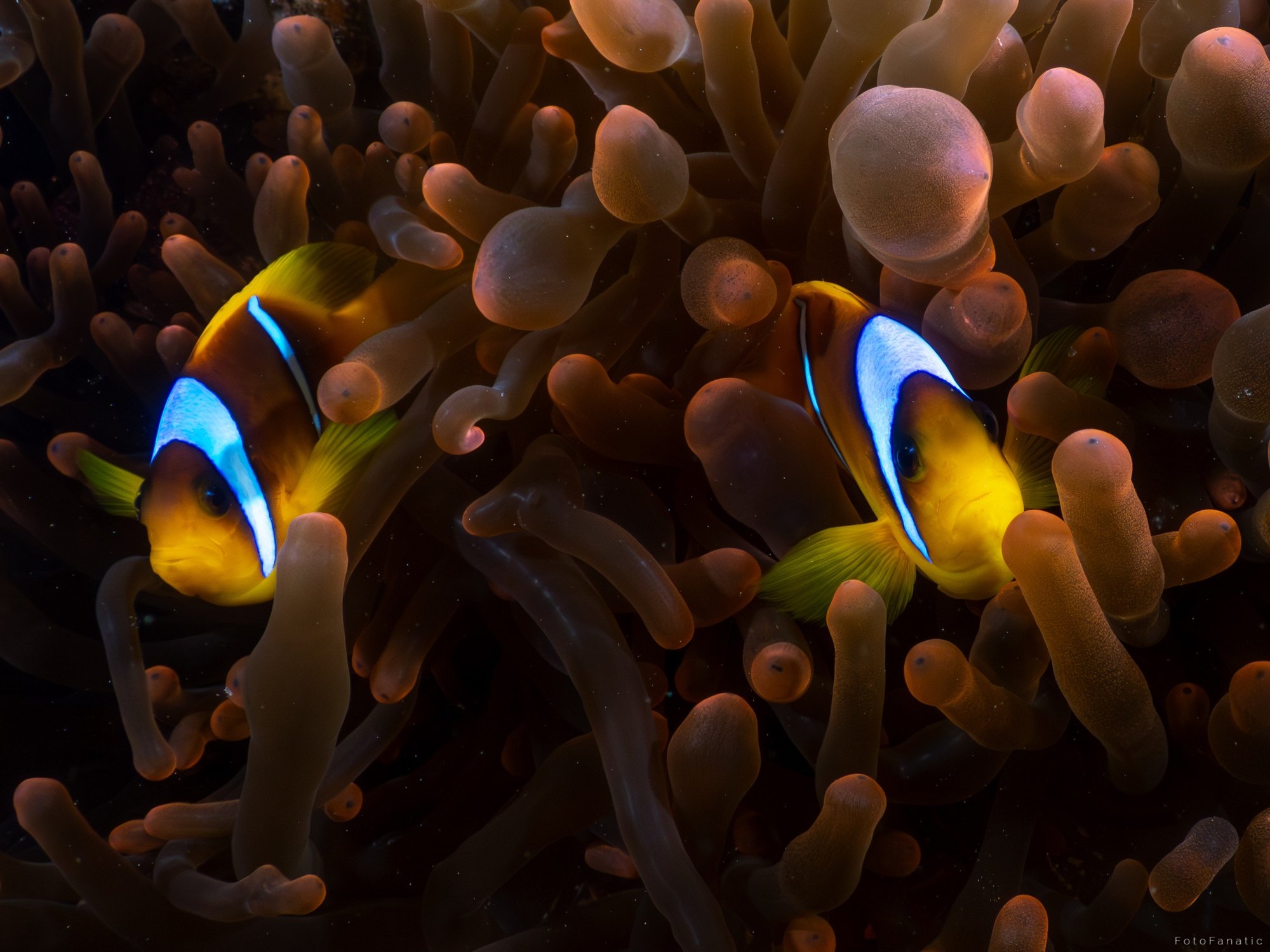
One of the most striking shore dives was at The Canyon — a genuine fracture in the reef plateau. We descended to around 27 meters to the entrance, walls rising on either side. Along the outer wall, the real character of Dahab becomes clear: the reef simply stops, and beneath you, open blue and a very steep drop-off.
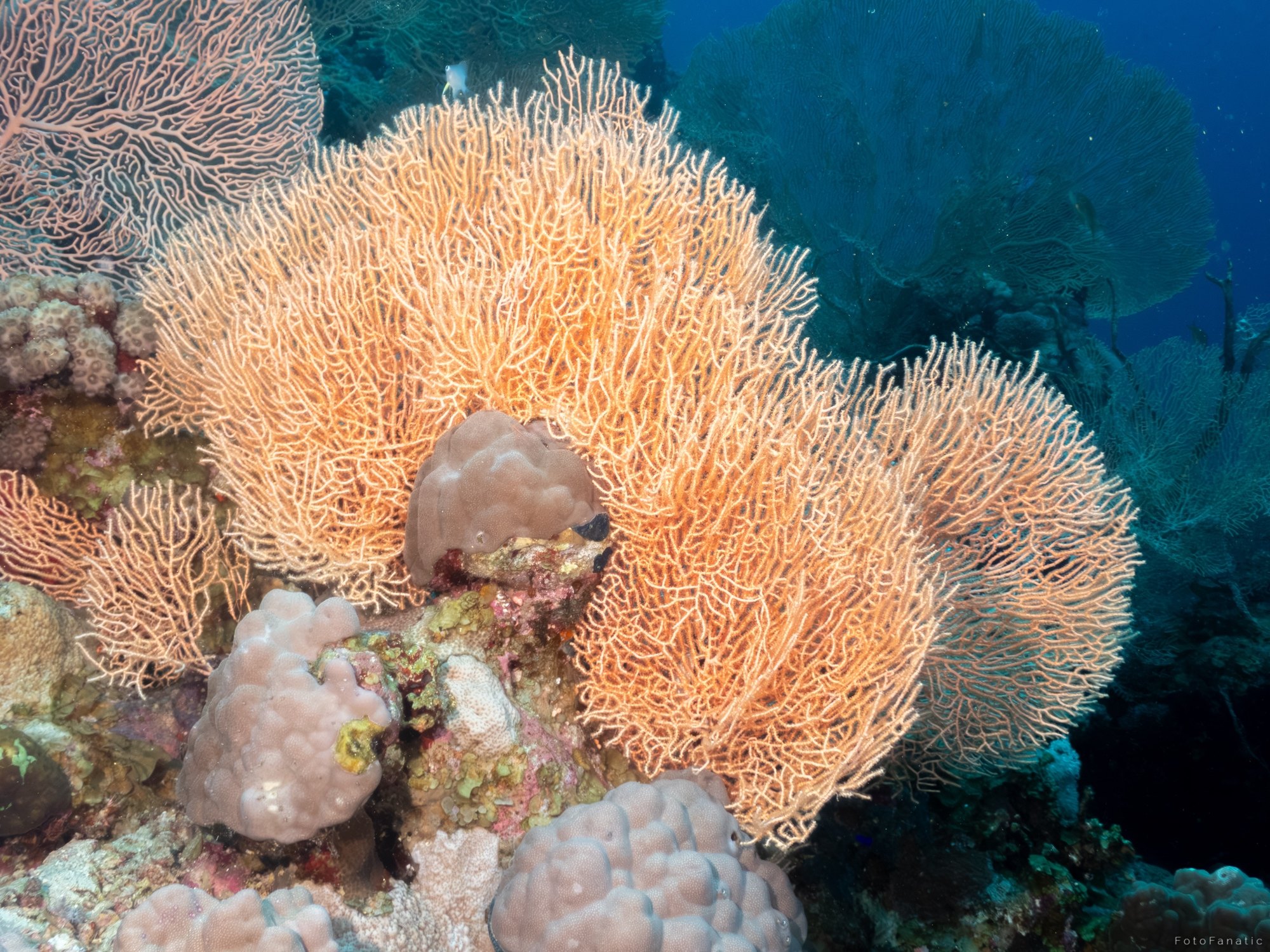
At El Shugarath we dropped to around 30 meters, where large fields of sea fans stretched as far as you could see — intact, undamaged, standing as they should. Gabr el Bint delivered steep walls and sandy slopes where fine sediment drifted downward in slow motion. Shaab Said is rarely dived because of current, but the sea was unusually calm and our guide made the call to go — it paid off.
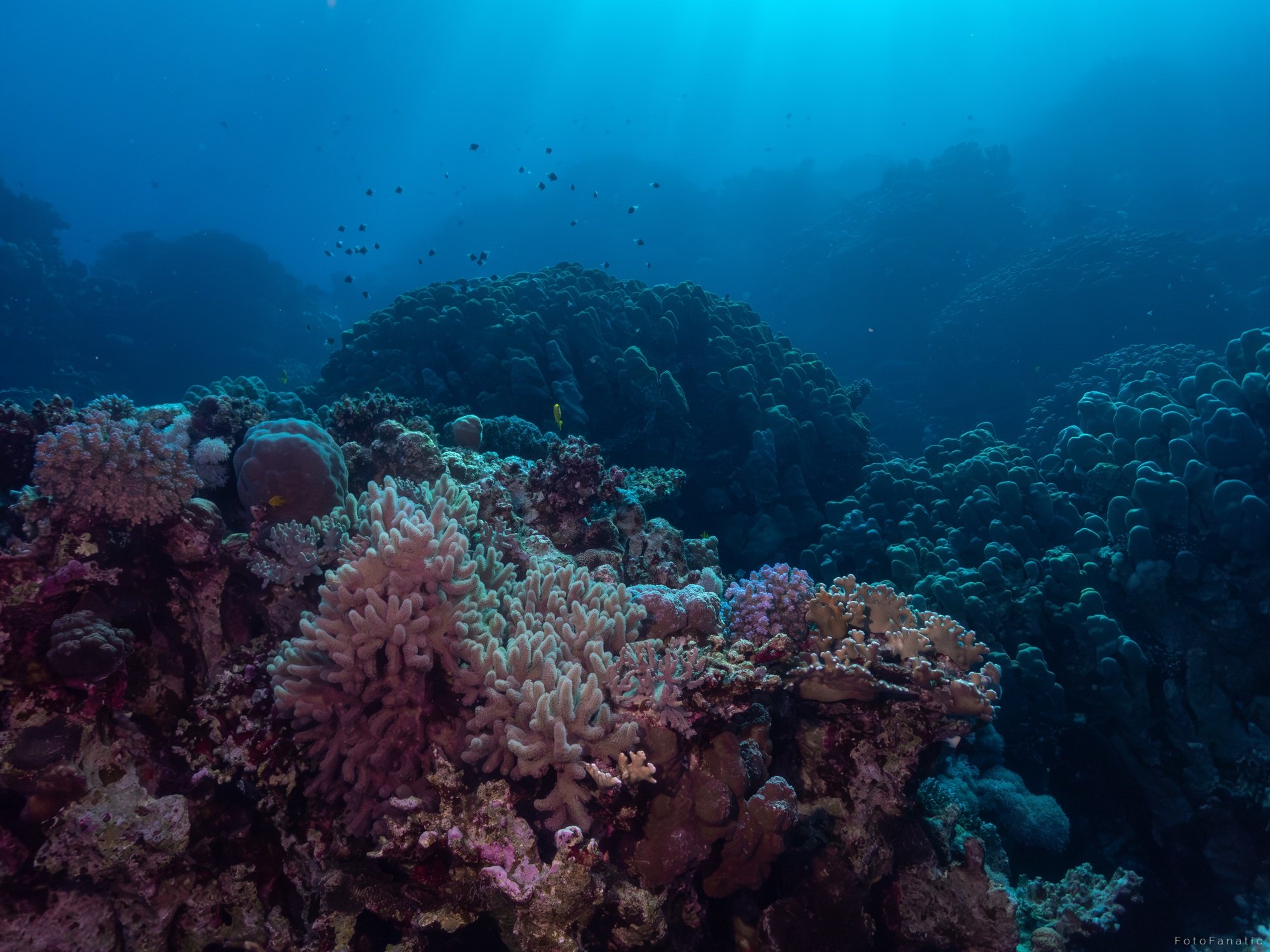
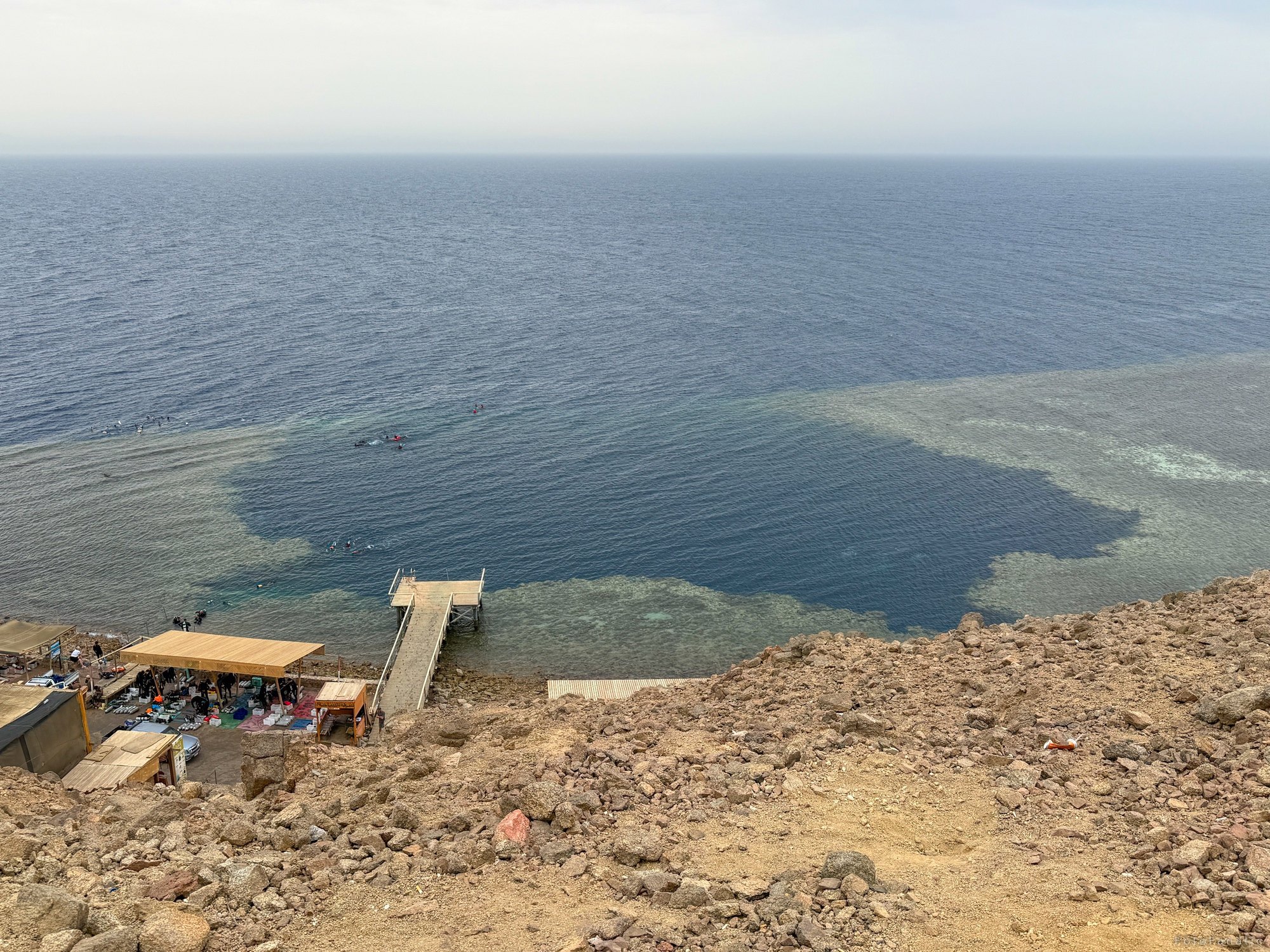
Few dive sites in the world carry the same recognition as the Blue Hole. We started at The Bells, a narrow vertical chute where you drop almost straight down to around 30 meters. The second dive took us inside the Blue Hole itself — a sinkhole roughly 150 meters across and around 110 meters deep, with The Arch, the tunnel connecting it to the open sea, at approximately 52 to 56 meters. Memorial plaques above the water commemorate divers who lost their lives here, and you see the names before you even gear up.
There is a long-told local legend about a princess who vanished into the depths and calls divers into the deep. There is no historical evidence for it — it's folklore. The risks here are not supernatural. They are measurable, predictable and entirely human. The Blue Hole does not need mythology to command respect. Its reality is powerful enough.
What made this trip stand out was not drama or spectacle, but the balance of everything coming together at the right moment: a strong and supportive group, distinctive dive sites each with their own character, rare calm conditions at sea, my 300th dive marking a personal milestone, and multiple species I had never encountered before.
Thanks to Jolanda for sharing the dives with me, to Scuba World Arnhem for the organization, and to the rest of the group for the great time we spent together. A trip to remember — not because of the perfect shot, but because of the experience itself.