
In 2025, while diving in Dutch freshwater lakes to document perch spawning, something unexpected caught my eye: a small, secretive fish guarding a nest. The tubenose goby (Proterorhinus semilunaris) turned out to be far more accessible than I had imagined. What started as simple curiosity quickly grew into a passion. Throughout the season I followed the complete embryonic development of this species from freshly laid eggs to hatching, while also documenting the accompanying parental behaviour of the guarding males.
This adventure unfolded very differently from my perch work. Instead of returning to a single known nest, I explored multiple lakes across the Netherlands and revisited many nests over time. The variation in male behaviour between locations was especially striking.
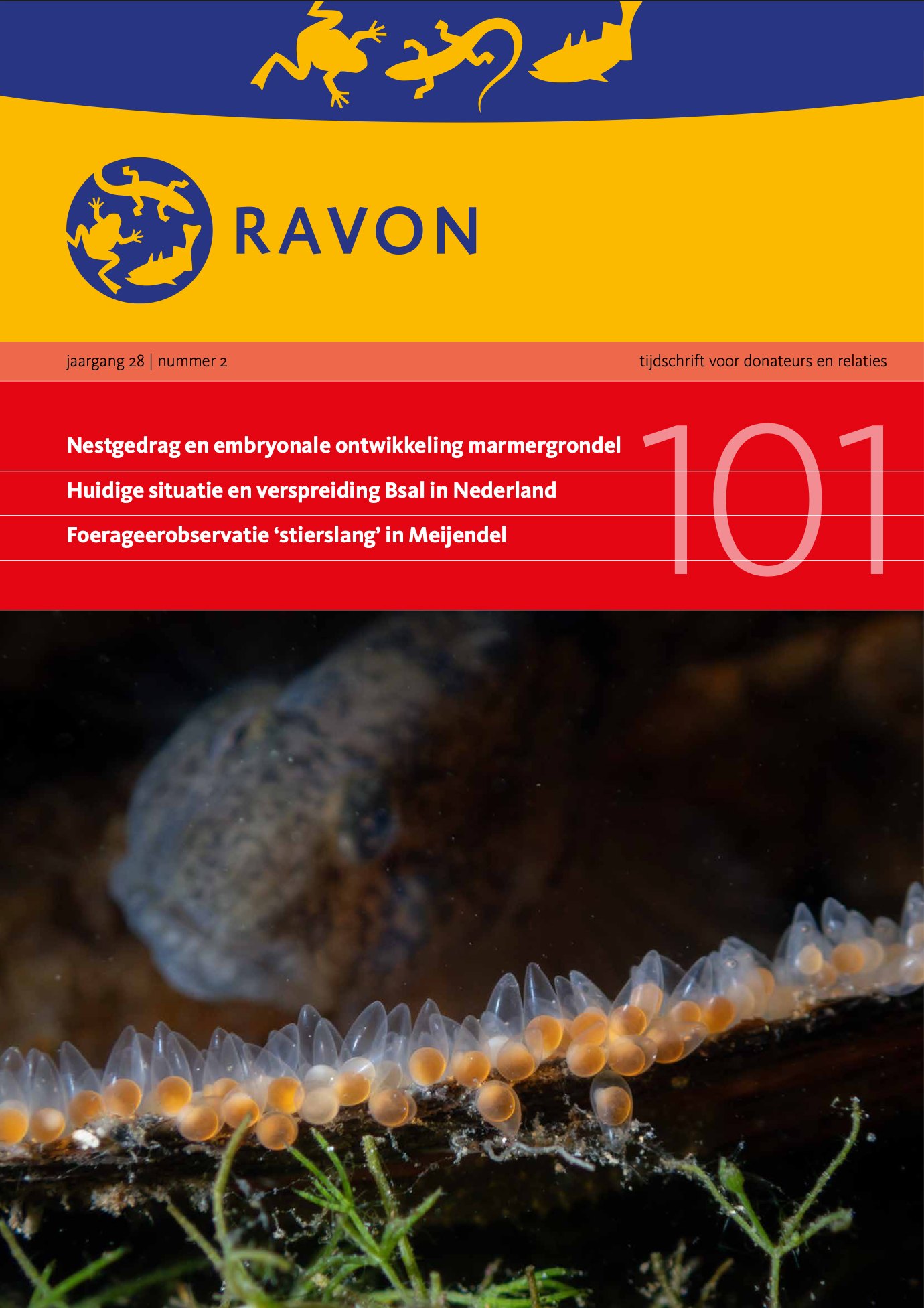
Cover of RAVON Magazine 101, featuring embryonic development of the tubenose goby, photographed by Freek van den Driesschen.

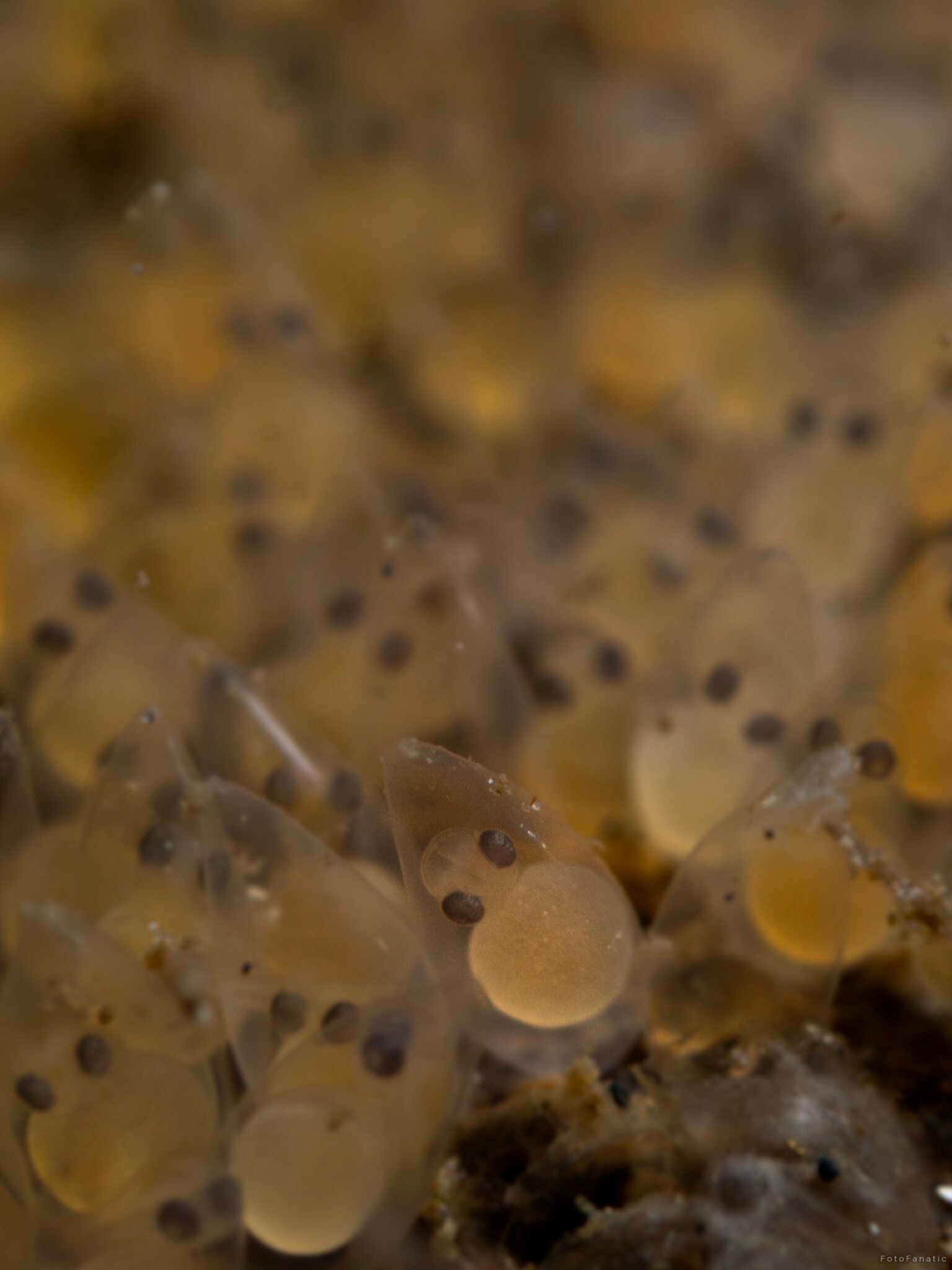
Behaviour and egg development
During the breeding season, the male chooses a sheltered spot under stones, wood or other solid structures. The eggs are laid in a compact cluster that is well protected from currents and predators. The male stays right next to the nest and guards the developing embryos constantly — removing debris and dead eggs, and constantly fanning the clutch with his large pectoral fins to keep a steady flow of oxygen-rich water moving over them.
By revisiting the nests throughout the season, I managed to document the full embryonic development from freshly laid eggs to the final stages before hatching. In several cases I was lucky enough to witness the actual moment of hatching.

The full article has been published in RAVON Magazine, Issue 101 (jaargang 28 | nummer 2). I'm proud to share that one of my images has been featured on the cover of this issue.
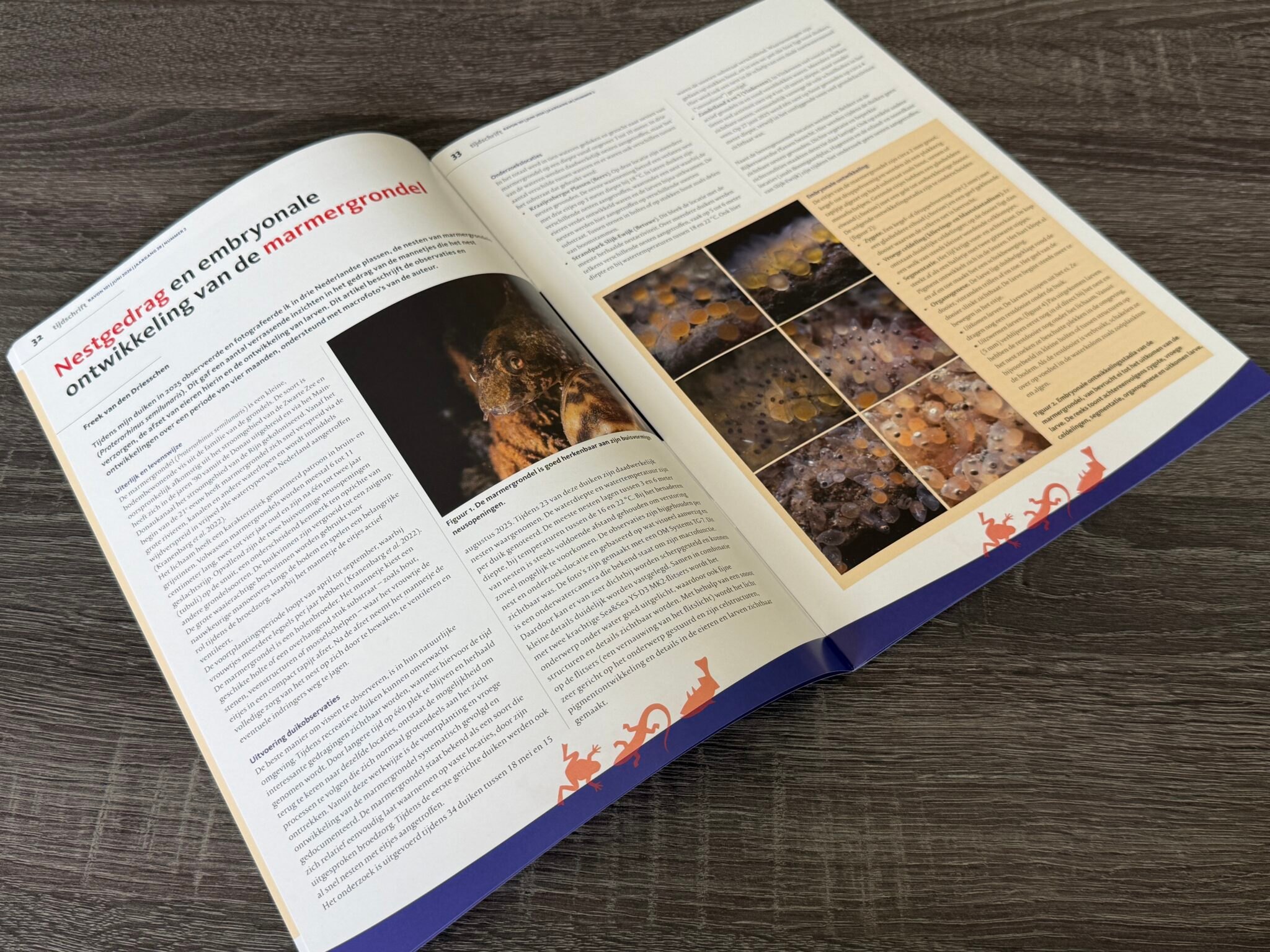
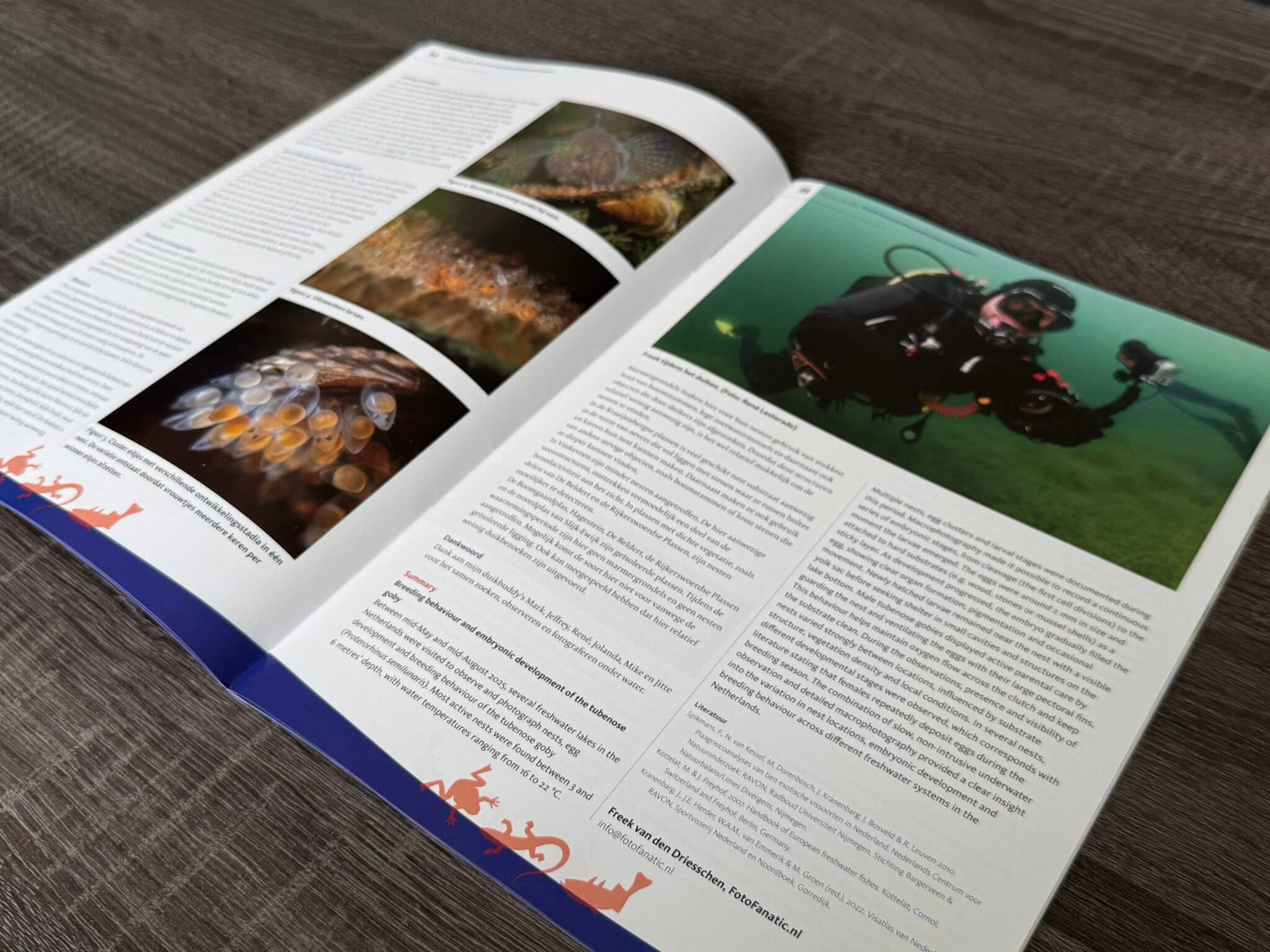
Life beneath the surface
Much of what happens on the lakebed stays hidden from view. Being able to observe this behaviour underwater really showed me a side of their life cycle that few people get to see: from egg laying and parental care all the way to hatching. By taking my time underwater and using macro photography, I could document this hidden world beneath the surface.
